Oatmeal Nutrition Facts
A 100 g serving of oatmeal contains 71 kcal, 2.5g protein (lime), 1.5g fat (pink) and 12g carbohydrate (blue). It's a good source of fiber and low in sugar. Its standout micronutrients are zinc (1.0 mg), magnesium (27 mg).
Core Nutrients per 100 g
PER 100 G SERVINGThe six values MacroDrop shows on every meal card: energy, the three macros, fiber and sugars.
Extended Nutrients
PER 100 G SERVINGGrouped as in the app: lipids, minerals, vitamins and other compounds sit one level below the core six. Daily values follow the FDA 2,000 kcal reference.
Understanding Oatmeal Nutrition
Oatmeal is a staple that provides complex carbohydrates, fiber and plant protein. At 71 kcal per 100 g serving, it provides 2.5g of protein, 12g of carbohydrate and 1.5g of fat. Oatmeal is particularly rich in zinc, delivering 1.0mg — 9% of the daily value — in a single serving. It's a good source of fiber and low in sugar.
For athletes and anyone tracking macros, oatmeal is easy to fit into a calorie-controlled plan thanks to its low calorie density. Its fiber and micronutrient content makes it a useful addition to a balanced macro split without pulling calories too high.
Frequently Asked Questions
How many calories are in a 100 g serving of oatmeal?
A 100 g serving of oatmeal has 71 kcal, 2.5g protein, 1.5g fat and 12g carbohydrate.
How much protein is in oatmeal?
2.5g per 100 g serving.
Is oatmeal high in carbs?
Oatmeal has 12g of carbohydrate per 100 g serving, about 4% of a 275g daily carb reference.
Which nutrients is oatmeal richest in?
Oatmeal is richest in zinc (1.0 mg), magnesium (27 mg).
Is oatmeal good for tracking macros?
For athletes and anyone tracking macros, oatmeal is easy to fit into a calorie-controlled plan thanks to its low calorie density.
Log the oatmeal in two seconds
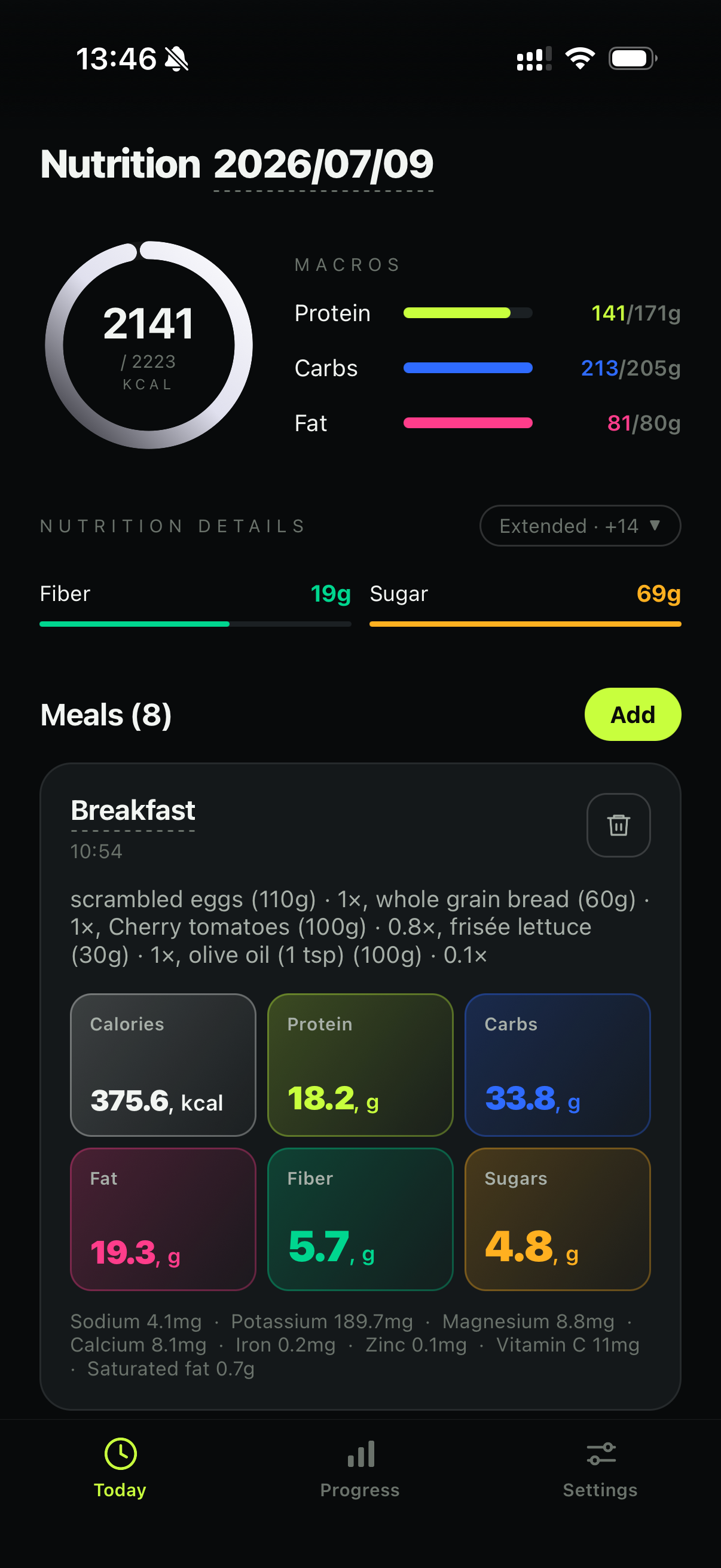
MacroDrop tracks all of these nutrients — core and extended — from a photo, your voice or a barcode. Offline USDA database, 7,800 foods.
Values come from the USDA FoodData Central entry Cereals, oats, regular and quick, unenriched, cooked with water (includes boiling and microwaving), without salt (FDC ID 173905), per 100 g. Daily values follow the FDA 2,000 kcal reference. Last reviewed August 2026.