Coffee Nutrition Facts
A 100 g serving of coffee contains 1.0 kcal, 0.1g protein (lime), 0.0g fat (pink) and 0g carbohydrate (blue). It has no fiber and almost no sugar. Its other nutrient values are modest — see the full breakdown below.
Core Nutrients per 100 g
PER 100 G SERVINGThe six values MacroDrop shows on every meal card: energy, the three macros, fiber and sugars.
Extended Nutrients
PER 100 G SERVINGGrouped as in the app: lipids, minerals, vitamins and other compounds sit one level below the core six. Daily values follow the FDA 2,000 kcal reference.
Understanding Coffee Nutrition
Black coffee is essentially calorie-free. At 1.0 kcal per 100 g serving, it provides negligible protein, carbohydrate and fat — none of the three macros are present in any meaningful amount.
For athletes and anyone tracking macros, coffee's own calories are trivial enough to ignore in a meal log. Its real relevance to training and recovery comes from caffeine, not macros — this cup carries 40mg. What usually adds meaningful calories to a cup of coffee is milk, cream or sugar, none of which are reflected in black coffee's numbers here.
Frequently Asked Questions
How many calories are in a 100 g serving of coffee?
A 100 g serving of coffee has 1.0 kcal, 0.1g protein, 0.0g fat and 0g carbohydrate.
How much protein is in coffee?
0.1g per 100 g serving.
Does coffee have carbs, sugar or protein?
Coffee has 0.1g protein per 100 g serving.
Which nutrients is coffee richest in?
No single micronutrient stands out sharply — see the full breakdown below.
Is coffee good for tracking macros?
Coffee itself contributes negligible protein, carbs or fat — its relevance to training and recovery comes from caffeine, not macros, so it isn't a meaningful source for hitting a protein or calorie target.
Log the coffee in two seconds
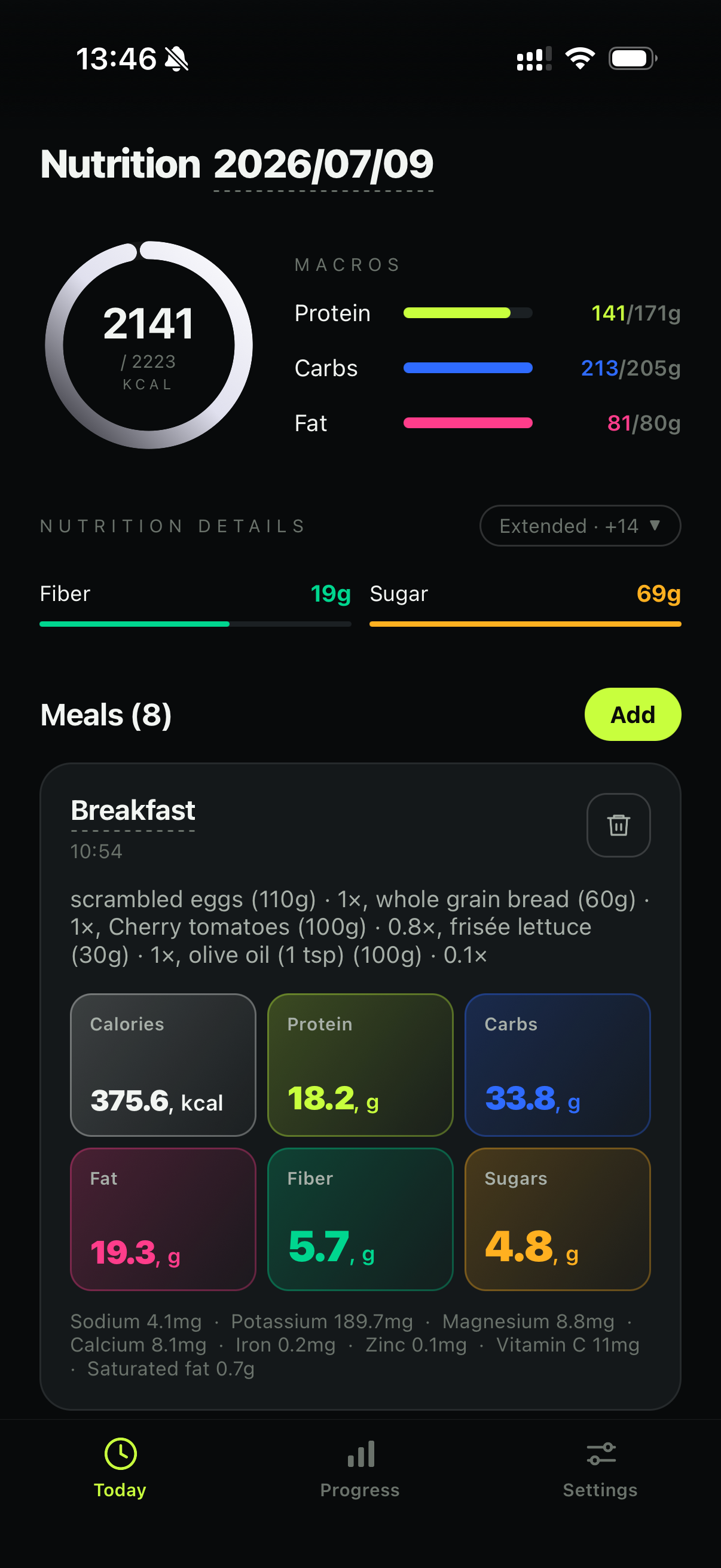
MacroDrop tracks all of these nutrients — core and extended — from a photo, your voice or a barcode. Offline USDA database, 7,800 foods.
Values come from the USDA FoodData Central entry Beverages, coffee, brewed, prepared with tap water (FDC ID 171890), per 100 g. Daily values follow the FDA 2,000 kcal reference. Last reviewed August 2026.